


Dr Anne Cambon-Thomsen is Honorary Research Director, CNRS, at the INSERM Centre for Epidemiology and Research on Population Health at the University of Toulouse, France (CERPOP). She will be giving the ELPAG Award Lecture on Tuesday June 16 at 13h30.
While Anne Cambon-Thomsen’s career has been varied, it has always followed a logical progression. Starting as an experimental researcher, she found herself becoming more and more involved with the ethical and legal questions surrounding genetics. “Once we knew the structure of the human genome, the logic was for people to go into functional genetics – now we have the genes, what do they do and how? But I thought that what we were going to do with this new knowledge was equally important, and that question brought me to ethics and all the societal aspects of genetics.”
Born in Toulouse, France, she has lived and worked there for almost all her life. At school, she was interested in science from an early age. “Before I left school, I had decided that I wanted to study medicine and also do research. So I did both trainings in Toulouse, more or less in parallel, followed by a postdoc in Denmark.”
On returning to Toulouse with her Danish husband, she subsequently became the youngest female director of an Inserm research unit in France. This was followed by an invitation to also direct another unit for the CNRS, the national scientific research organisation. Directing two units at the age of 37 was ‘an exceptional situation’, she says, but it had to come to an end. “You can only be a unit director for a certain number of years; after that you have to restructure your unit significantly or pass the baton to someone else.” It was at this stage that she started to think more deeply about the societal aspects of her work, particularly in the areas she had specialised in – immunogenetics, transplantation, and population genetics.
After taking a course on the ethics of health, she approached the director of a public health unit in Toulouse with a proposal to create a new interdisciplinary team to work on an integrated approach to the subject. Many had doubts, at least at first. “Is this really research?”. “Shouldn’t expert committees be doing this rather than researchers?”. “Will young researchers in this team be able to find jobs afterwards?” were typical questions. She persisted, and was able to set up a team within a new unit of epidemiology and public health. It started with just three people. “Now, with my successor, there are forty,” she says, proudly.
In her earlier career she had been responsible for the collection of many biological samples, but the next director in the lab was not going to use these collections. “So I asked myself a practical question: what should a researcher do in these circumstances? It costs money to maintain such collections and if they are not going to be used, what happens to them?” This led her to focus her research on biobanks. “At the end of the 90s, there were a lot of collections, but no real biobanking organisation. I have published a lot on this subject, and it is for this work that I became known for in the ELSI – Ethical, Legal and Societal Implications – domain.”
Working with people from many different fields was rewarding and productive. “Coming from medicine and biology and meeting sociologists, lawyers, psychologists, and philosophers was fascinating, but also difficult to organise at first. Such a team was a novelty at the time, and finding money was difficult too.” However, she succeeded in obtaining support from the EU, who had started to introduce the idea of public accountability and ethics into research projects. “The Commission was taking seriously the idea of patient associations and public participation, so this was a good opportunity for me to advance the idea.” That also led to the creation of a societal platform, a new concept that still continues today within the Genopole of Toulouse, a service to researchers and a bridge between them and the public on ethical and societal questions.
Semi-retired now, she intends to keep her positions on some advisory boards and continue evaluating projects. “And I’ve already started some retirement projects. I have started piano lessons again, and I read to children in schools, which I really enjoy. I’m also a member of several associations, including one for the dissemination of science.”
She will be taking the conference through her career journey, giving examples of some of the ethical issues she has faced along the way. “There have been so many instances where a research project has come about because of some small event that has prompted a wider reflection. I think it’s important for people to know that what appears to be insignificant happenings can change the orientation of a career. And I’ll talk about the great pleasure that constructing and working in an interdisciplinary team of open-minded people has given me.”
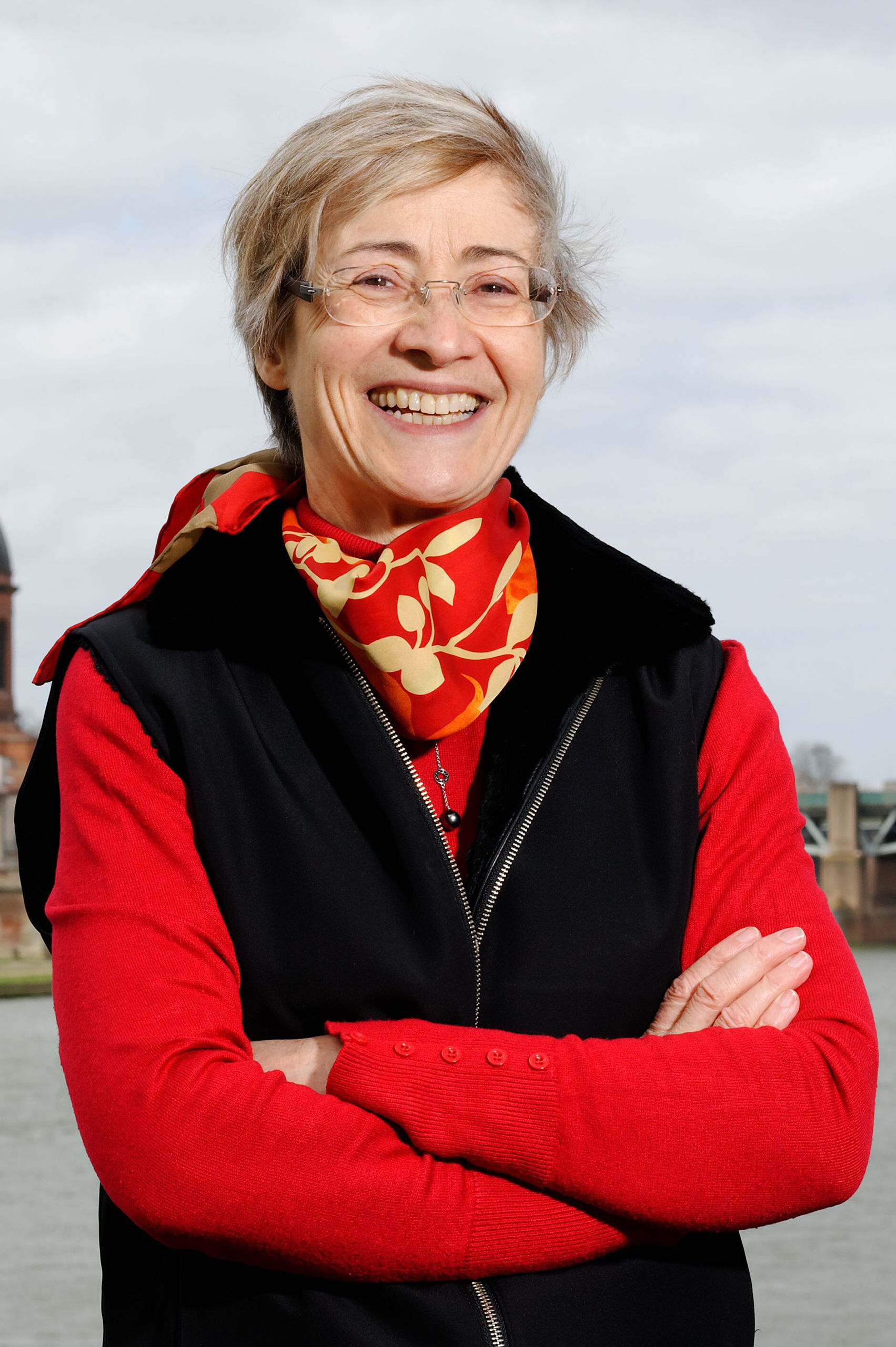
Photo by Inserm