


Tuuli Lappalainen is Professor at the KTH Royal Institute of Technology, Stockholm, Sweden, Director, National Genomics Infrastructure & Genomics Platform, SciLifeLab and Senior Associate Faculty Member, New York Genome Center. She will be giving the ESHG Award Lecture at 13h50 on Tuesday June 16.
Tuuli Lappalainen was so young when she first became interested in science that she can’t remember her exact age at that time. “I think I’ve always just been interested in how the world works, and why things are the way they are. So looking around me and asking questions about what I’m seeing has always been part of my life.”
She grew up in a family that was equally curious and questioning. “We were surrounded by books and magazines, and my parents encouraged my curiosity. On weekend mornings, I’d read the newspaper and find that my dad had done calculations on it to verify whether some of the things described made sense. So having a questioning mentality is a family characteristic.”
Although she was occasionally tempted by the thought of another career when she was very young – a zookeeper was one such idea – there wasn’t much doubt that she was destined for an academic career, and she didn’t need any encouragement from her parents to go down that route. “I think it solidified pretty much at high school age that I would go for some kind of research career in biology, which is a subject that has always fascinated me,” she says. “I was particularly interested in human biology, with its links to evolution, genetics and physiology and how these change over time through heredity. In my late teens I figured out that I was interested in genetic mechanisms and their related basic discovery research. I didn’t feel that being a medical doctor was the right fit for me.”
In the year 2000 she graduated from high school and went to university in Turku in South Western Finland, followed by a PhD in Helsinki. At that time there was a boom in biotechnology-related research, she says. “There was a great sense of opportunity and doors opening to allow researchers to do new things. And the sequencing of the human genome the same year as I started studying biology at university meant that I was part of the first generation of geneticists fully trained in the genome era. We had textbooks from the previous era that had become outdated basically overnight. With the genome we had a whole new toolkit in our hands.”
She is proud of the data resources she’s been part of building, the impact they have had on the genetics community, and the diverse forms of science that such data have enabled across the world. “When I see a paper that is doing analysis with an open resource dataset that I was part of creating as a postdoc, or with a consortium, it’s rewarding to realise that I had a part in helping that science happen. Creating something that is valuable for a lot of people, whether its data resources or methods, is very satisfying. And the biggest impact we have, of course, is not via our own specific papers or datasets, but by the people we train. I’ve been fortunate to work with fantastic young scientists who have left my lab to start their own labs or companies. Having a role in their career path is very fulfilling.”
Of course, there are the boring bits, but she accepts that there’s no free lunch in the world and administrative stuff is an integral part of the system. “If you want to do ambitious work and push boundaries, you just have to get on with it.” A bigger disappointment is the disintegration of the global research community. Whereas when she started her research it was easy to move to work in different countries and to collaborate across borders, new borders are starting to be erected. “It feels as though the global community that we had has been negatively affected by today’s international politics, so that younger researchers don’t get to live in the same open world as we did. I find that very sad, and harmful to the research community as well as to individuals.”
If she hadn’t been a scientist she might have become a writer. “I also love art, but I’m not an artist, so maybe managing a gallery. Retirement is a long way off, but I will probably do something related to writing when I get there, and maybe try to stay active in the research community in some way. I get bored very easily and am not good at sitting around doing nothing.” Since she works on two continents at present there’s not much time for inactivity. “When I get the chance, I like food-related things and just general hanging out.”
She will be telling the conference about her quest to interpret molecular and cellular effects of genetic variants that capture the molecular processes driving the genetic impact on human traits and disease. “Many studies from our community have made major discoveries, but there are still many challenges ahead in figuring out what those variants actually do in cells. I’ll talk about some of the roads ahead, and what kind of toolkit will help us advance on this path.”
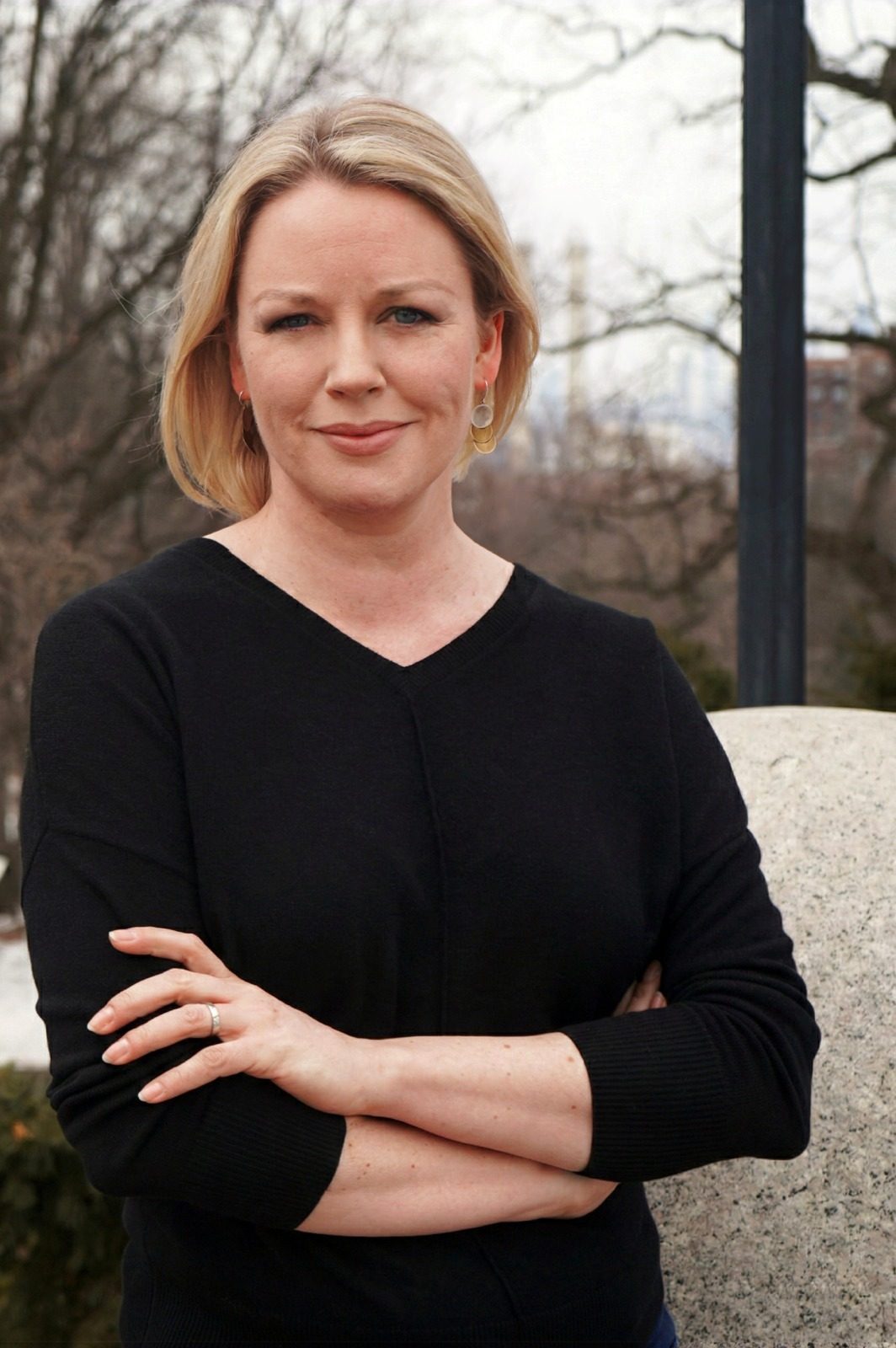
Photo by RJ Pisani