


Guillaume Canaud is Professor of Translational Medicine and Targeted Therapies at the Necker–Enfants Malades Hospital in Paris. He will be giving the Mendel Award Lecture on Tuesday June 16 at 14h35.
Guillaume Canaud describes himself as a ‘rather lazy and dreamy’ child. “I was far more interested in my friends and life outside school than in academic work. I always enjoyed science and understanding how things functioned, but I only truly had my intellectual awakening at the age of 17, just six months before the French national examination that grants access to university.”
He comes from a family of scientists. His mother was a paediatric anaesthesiologist, and his father a professor of nephrology in Montpellier, in the south of France, so medicine and science were constant topics of conversation at home. “My father is also an inventor”, he says. “He developed a dialysis catheter—an access device that allows patients to undergo dialysis under optimal conditions. This catheter is now used worldwide, and this has always filled me with immense pride.”
Around the age of 18, he developed what he describes as a deep fascination with understanding mechanisms. “My motivation was never to memorise and recite entire chapters of textbooks, but rather to understand in depth how things work, as this made learning both easier and more meaningful to me.”
After finishing medical school in Montpellier, he initially opted to follow in his father’s footsteps and chose nephrology, a subject he describes as renowned for its intellectual rigour and its breadth. But following a Master’s and a PHD in science: “I developed a true intellectual love affair with basic science, and started to work on the role on intracellular signaling pathways in chronic kidney disease.” This work led to publications in leading scientific journals, a postdoctoral fellowship in the United States at Harvard Medical School in Boston, and eventually his first major grant: a European ERC Starting Grant.
In 2015, a meeting with a patient changed his life profoundly. “A young man named Emmanuel, about 25 years old, was suffering from a rare mosaic genetic disease associated with kidney failure. His prognosis was devastating, with no available therapeutic options. The disease was progressive and deforming, associated with severe pain, fatigue, and multi-organ dysfunction. His story moved me deeply.”
“Using the scientific and medical knowledge accumulated over the years—and a great deal of curiosity—my team and I identified a potential treatment for him. The drug was originally being developed for breast cancer. We created the first preclinical model that recapitulated the patients’ symptoms and deformities, demonstrated treatment efficacy in animals, then in Emmanuel himself, and subsequently in several other patients, including children. We conducted the first real-world clinical trial, which ultimately led the U.S. Food and Drug Administration to grant marketing authorisation for this drug in this new indication.”
As a result, several thousand patients worldwide now benefit from a new, less invasive therapeutic approach, with fewer surgeries and dramatically improved symptoms, he says, and this is a tremendous source of pride. The encounter with Emmanuel changed the course of his career. “I stopped practising nephrology and dedicated myself entirely to the care of adult and paediatric patients with mosaic disorders associated with overgrowth and vascular malformations. We established a genetic diagnostic platform, developed numerous preclinical models, identified several additional treatments, and became experts in drug repurposing—using medications developed for one indication to treat rare genetic diseases, thereby practicing true precision medicine.”
He counts receiving authorisation to treat Emmanuel and seeing the first signs that the treatment was working as among the most memorable milestones of his career. Another – above all, he says – was the moment when a young girl he had treated and who had been paraplegic for two years took her first steps. “Today, she walks normally and has recovered fully. The joy this brought the team is beyond words.”
Science is lucky not to have lost him to music. “When I was young, I would have love to have become a disc jockey.” Today, outside of science, he appreciates art and reading, and is passionate about sport, particularly hiking and running. “One of my greatest pleasures, when possible, is traveling with my family. While my work allows me to travel extensively, sharing these experiences with my wife and children is something entirely different and profoundly enriching.”
Retirement? “One day the question will arise, inevitably. In France, retirement comes relatively early and the opportunities to pursue a professional activity afterwards are limited. If continuing my work in France becomes impossible, I would consider moving abroad, but I would do so with sadness. I am deeply proud of my country, grateful for what it has given me, and proud to contribute—albeit modestly—to its scientific influence, even during these challenging times.”
At the conference he will invite the audience to discover his unconventional career path. “Geneticists have one of the most extraordinary professions: they establish diagnoses, understand disease mechanisms, and identify potential treatments. The final step—delivering effective therapies—must now be fully embraced. We are fortunate to draw inspiration from oncology, and we must seize this opportunity and apply it to our patients. The message is clear: remain open-minded, adventurous, and ready to seize therapeutic opportunities when they arise. Patients with rare genetic diseases are waiting for this from us.”
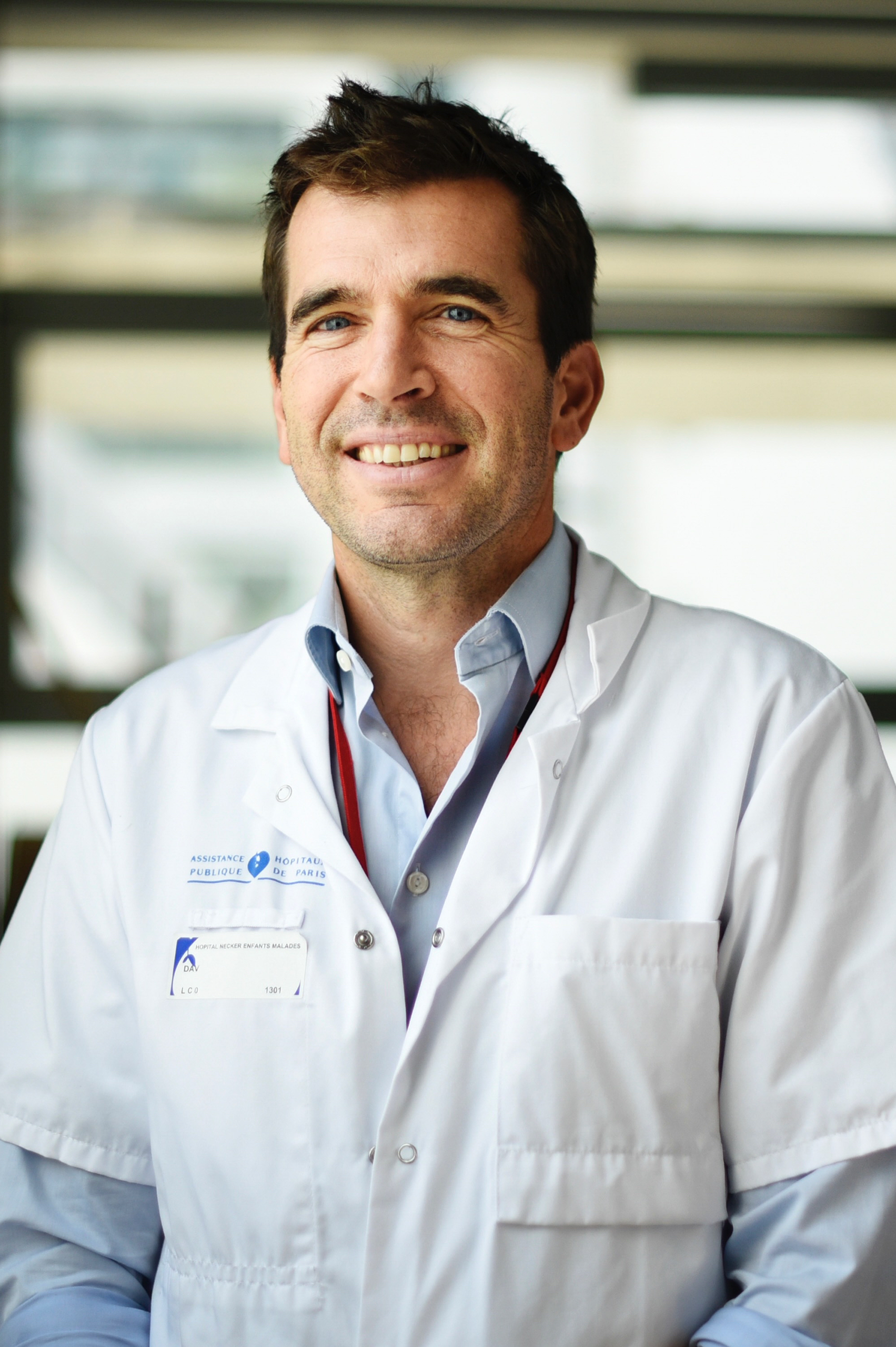
Photo by Florence Brochoire